JustMOVE for Churches
If we can’t talk about racism in our churches, where can we talk about it?
JustMOVE helps people of faith have courageous conversations that build bridges across cultural differences
What We Do
Performances
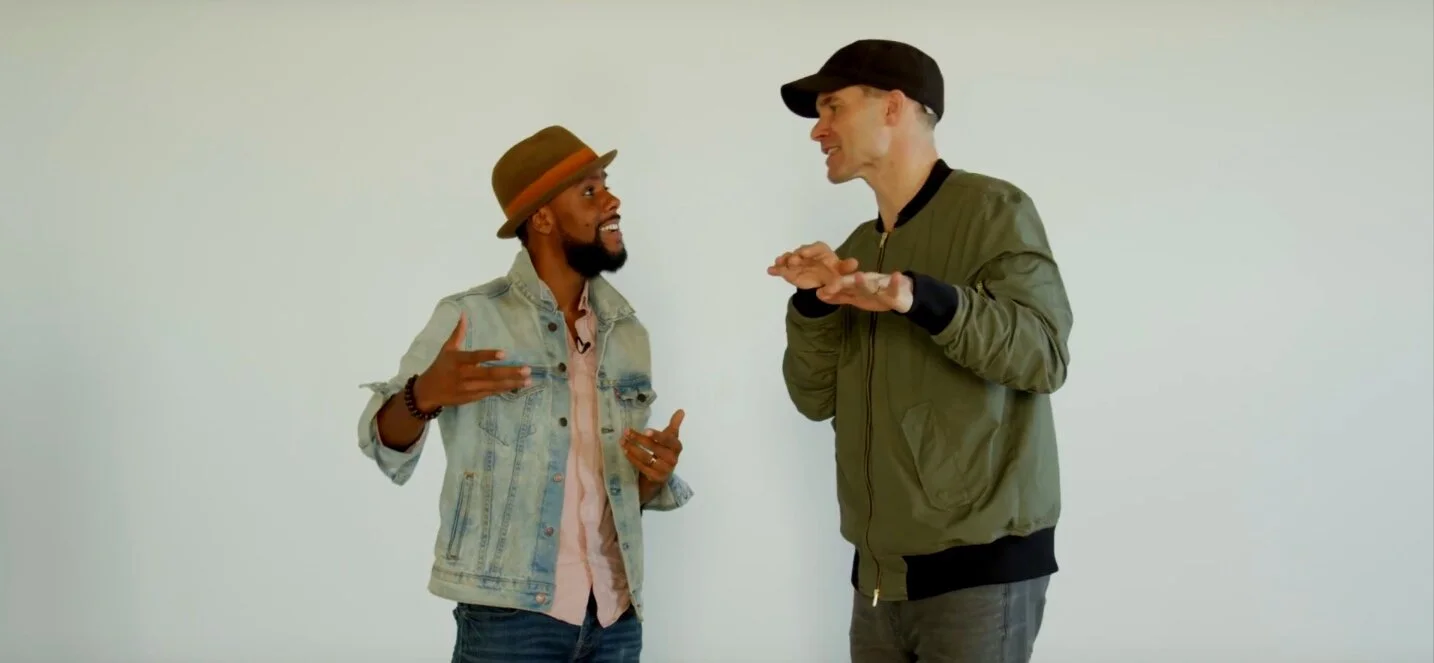
Joe and Dave use music, poetry, and storytelling to inspire people into deeper conversations about race and culture.
Retreats
Joe and Dave facilitate meaningful educational events that help give participants helpful language as they work to build bridges across cultural and racial differences.
Courses
Joe and Dave offer cohort-based courses for individuals and organizations who want to develop a community of intercultural humility and anti-racist practice.
Consulting
JUSTmove offers intercultural development assessments, group education, and executive coaching for individuals and organizations that want to “move the needle” toward more just and welcoming spaces.
Our Messages
ROOF CUTTER CREW: In the story of the man who was paralyzed, there were a group of people who saw a need, reflected on how they could help, and quickly sprung into action as they participated in Gospel Inclusion. They cut a hole in the roof, lowered the man down, and ensured that he had access to God’s healing like everyone else. As people of faith, each of us are called to become “roof cutters”, identify the barriers that get in the way of flourishing, and cut holes in the roofs of exclusion to ensure that everyone is welcome. This interactive presentation/performance weaves together music, poetry, and storytelling to explore these subjects together.
WHITENESS IN THE ELCA: In June of 2015, Dave had a chance to spend time with people at Dylann Roof’s church just days after he committed the Immanuel AME Massacre. Dave began to wonder: this awful racist violence happen in spite of the messaging at their church or possibly, in part, because of it? This haunted him and sent him down a path of reflection about his 97% white ELCA church and how we can began to build Beloved Community that looks more like the kin-dome of God. Music, poetry, and storytelling is all used in this powerful presentation.
A JESUS APPROACH TO POWER: What is power? Who has it? What kind of power do we have? In this engaging performance, JUSTmove helps people explore power so that they can have a healthy relationship with it (the power that goes unnamed often becomes weaponized). How do we respond to power in ways that honor our values of faith and justice? JUSTmove will help us unpack this and more with music, dancing, poetry, and storytelling.
OUR STORIES OF RACE: If we can’t talk about difficult subjects like race in church, then where can we? This engaging keynote performance tells the story of both Dave and Joe’s racialized experiences. As they share vulnerably, they invite others to interrogate their own stories of race as we all identify the ways that it has shaped us as humans and as beloved children of God.
Resources for Churches
Article-“Why Shame is not effective” by David Scherer
“We must act with the urgency of the moment and the patience of 1000 years”-Mariam Kaba
I spoke with a fellow white anti-racism trainer recently who was thoroughly frustrated with his friends. “I’ve been trying to get people to come to my trainings for years” he lamented. “Now, after George Floyd was murdered, everyone is trying to sign up for my courses. Why now? Where were they all these years when people were suffering from the effects of racism? I don’t even know how to deal with them now!” He cried out. For so many of us, it is easy to be frustrated with people that have not traveled as far as we feel like we have on the anti-racism journey. Like the workers from Jesus’ story about the vineyard, we feel like we have labored too hard to allow “newbies” to come in and mess it all up (and still get the same wages!). We have worked hard to do research, build relationships, and awaken our hearts to be broken by the same injustice that breaks God’s heart. And yet, there are those around us who are just waking up now. Where have they been this whole time? It is so tempting to shame people and guilt them for not being exactly where we are. As tempting as it is, here are a few reasons why shame and guilt are not effective tools in sustainable anti-racism and intercultural development work for congregations:
The brain cannot learn when it is feeling shame
Neuroscientists have taught us that the feeling of shame creates an “amygdala hijacking” (Goleman) that reduces the functioning of our brain as it goes into survival mode to protect us. One of the best ways to help people learn is to help them preserve their sense of wonder and curiosity. This shuts down when we are in self-preservation and fear mode. For those of us with racist parishioners who are always attacking us after our sermons for talking about race, what if our next post-sermon conversation was spent asking them questions about their upbringing with compassionate curiosity which gave them permission to ponder their beliefs and where they might have come from?
Human development happens incrementally
None of us came out of the womb “woke” about social issues knowing all the things about anti-racist terminology and behavior. All of us experienced a learning curve on our path. Those things that you are angry at your congregation for not knowing, they were all things that you didn’t know at one time. You may have learned them 20 years ago or you may have learned them last week. But many of us had gracious teachers that were willing to be patient with us and allow us to ask “silly questions” in order to learn. In the work that my partner Joe and I do we always use our friend Richard Webb’s advice: “Do not hold people responsible for thoughts and experiences that they haven’t had yet.” Our job as Christian public leaders is to give people a glimpse of what God’s liberation can look like. The boundary breaking kin-dome of God is “caught not taught”. How can you facilitate a safe learning environment for your people to grow in their understanding of race and culture that is developmentally appropriate for where they are and not where you want them to be?
Shame is not a sustainable motivator
I heard a friend say “shame is a great visiting professor but a horrible tenured professor”. There are moments where the prick of shame is our conscience telling us that something we are doing or have been doing is not right. This can be a helpful teacher at times for us. However, shame can also be an immobilizing tool that turns our focus to ourselves rather than those who have been harmed by our actions. Most of my friends of color aren’t worried about my shame. They’re worried about me showing up better for them in our interactions and committing to reparative actions. If we continue to rely on shame as our primary tool, people will often respond by either doing just enough work to avoid feeling shame or will find unhealthy ways to avoid responsibility and dissociate from their guilty conscience. We don’t want either of these outcomes. What if, instead of creating a cancel “call out” culture, we created a confessional “call in” culture? What if we created opportunities for our people to be in it for the long haul, discovering what confession and “metanoia” could look like as they change their minds and change their course towards God’s heart of peace and justice?
The Gospel sets us free from shame
The life, death, and resurrection of Jesus Christ are the catalyzing force for our personal and collective liberation. This unmerited grace of God is so humbling that we cannot help but open our ears and listen to others whose experience is completely different from ours. This powerful justice of Jesus is so activating that we cannot help but stand in fierce solidarity with people who are experiencing oppression. This boundless love of the Holy Spirit is so compelling that we cannot help but cross barriers to be in relationship with our neighbors who are different from us. Shame was not a part of God’s plan for creation and is not a part of God’s plan for the New Creation either. If it wasn’t a tool that God intended us to use, then we probably shouldn’t use it. Instead, we must always remember how far God has brought us on our journey so that we can be patient and gracious with others who are on their journey. For those of us with dominant cultural identities, if we know that polarization and guilt-mongering are not effective and we still use those tools, then that is our privilege showing. This move toward guilt becomes about us and our nobility and righteousness, not actually about the conviction of God’s grace moving us forward.
I told my friend who was mad about people not signing up for his course until now, you could shame your friends for not taking your anti-racism trainings earlier, or you could get excited about the work that is ahead for them. You could judge them for all of the racism that lives in them or you could reflect on and repent for the ways that racism is still alive in you. You could hold them accountable with contempt for things that were once unknown to you or you could model the gracious teachers in your life that helped you continue to grow. I hope that he will remember, like all of us, that we are all works in progress. God isn’t done with us yet!
“This life therefore is not righteousness, but growth in righteousness, not health, but healing, not being but becoming, not rest but exercise. We are not yet what we shall be, but we are growing toward it…”-Martin Luther
To My Beloved Children.
This video names the desire for our children to live into God’s beloved community free of racism and white supremacy. It can be a great conversation starter for people of many ages. Contact us for more information about how to download the video.